Color Theory · Page 3 of 6
Color themes and symbolism
Knowing color theory can help your content stand out. Color can draw the eye, trigger an emotional response and even communicate without words.
Color themes
A color theme (or scheme) is a starting formula for a palette. Don’t be afraid to play with the palette and create your own interpretation: the formulas are starting points to guide and inspire you.
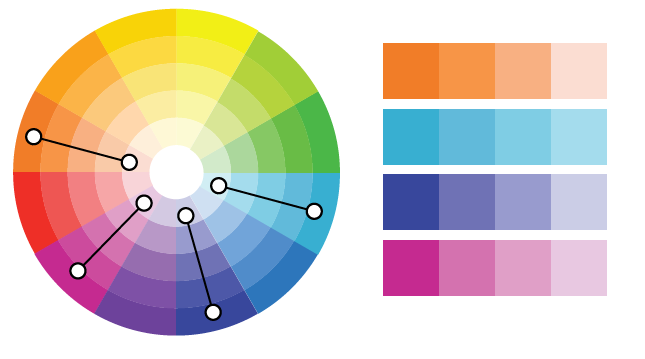
Monochromatic
Uses one color or hue.
Pick a spot on the color wheel, then use saturation and value to make variations. Monochromatic schemes are guaranteed to match because every color comes from the same family.
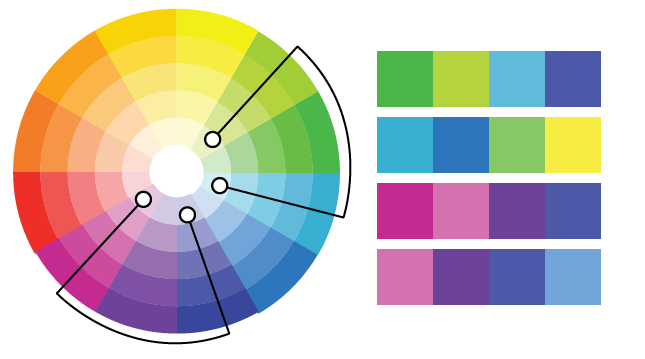
Analogous
Uses colors next to each other on the wheel, like reds and oranges or blues and greens.
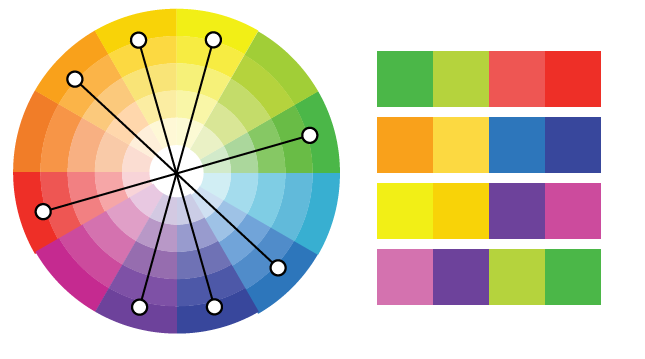
Complementary
Uses colors opposite each other on the wheel, such as blue and orange or the classic red and green.
To keep a complementary scheme from looking too simple, add lighter, darker or desaturated tones.
Color symbolism
Skilled designers tap into the emotions colors make us feel. Understanding what colors mean can help you create more effective, memorable designs. Each group of logos below uses one color to say something about the brand.

Red
- Love
- Passion
- Strength
- Power
- Danger
- Excitement
- Energy

Orange
- Warmth
- Creativity
- Adventure
- Freshness
- Happiness
- Attraction
- Success

Yellow
- Optimism
- Cheer
- Happiness
- Warmth
- Caution
- Energy
- Intellect

Green
- Nature
- Growth
- Wealth
- Luck
- Envy
- Freshness
- Quality

Blue
- Trust
- Calm
- Sadness
- Peace
- Loyalty
- Depth
- Authenticity

Purple
- Royalty
- Nobility
- Wisdom
- Luxury
- Imagination
- Mystery
- Spirituality
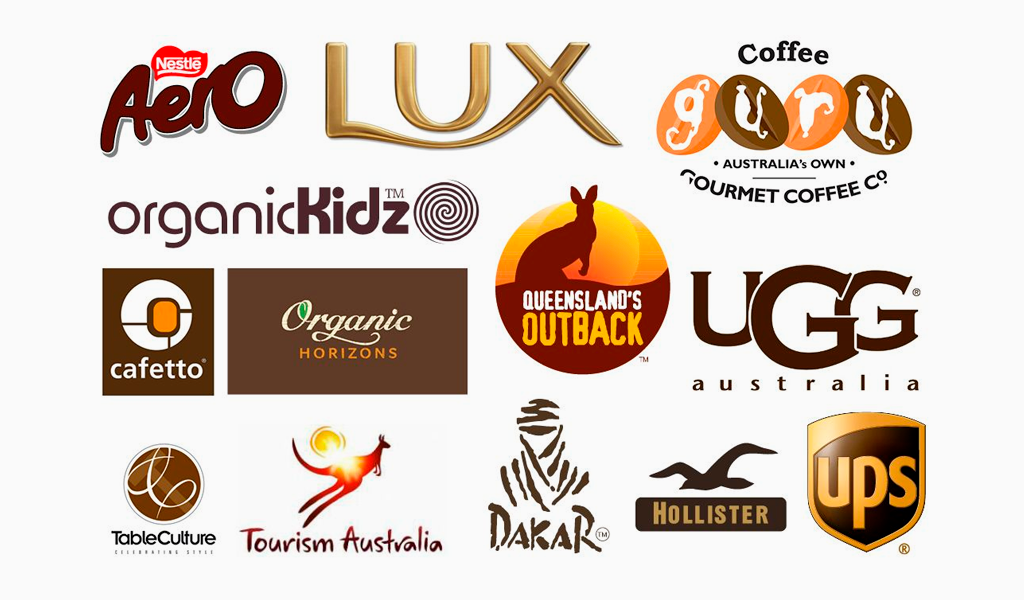
Brown
- Reliability
- Confidence
- Friendship
- Approachability

Black
- Sophistication
- Formality
- Sorrow
- Boldness
- Elegance
- Death
- Mystery
© Created by Sara Rosenstock, Marietta College Graphic Design.